
FAMILY SURF LOG 03
This month has been wild. My wife’s car had some trouble, mine needed some overdue maintenance, and both cost money we really didn’t want to spend. Then her A/C officially gave up. Florida in August… yikes.
So by the time the waves finally arrived (did I mention it’s been flat?!) I was feeling pretty bummed and uninspired. I decided I needed to get to the beach. I threw Pink Floyd in the CD player, put the Tacoma in drive, and headed east.
I’m really glad I did.
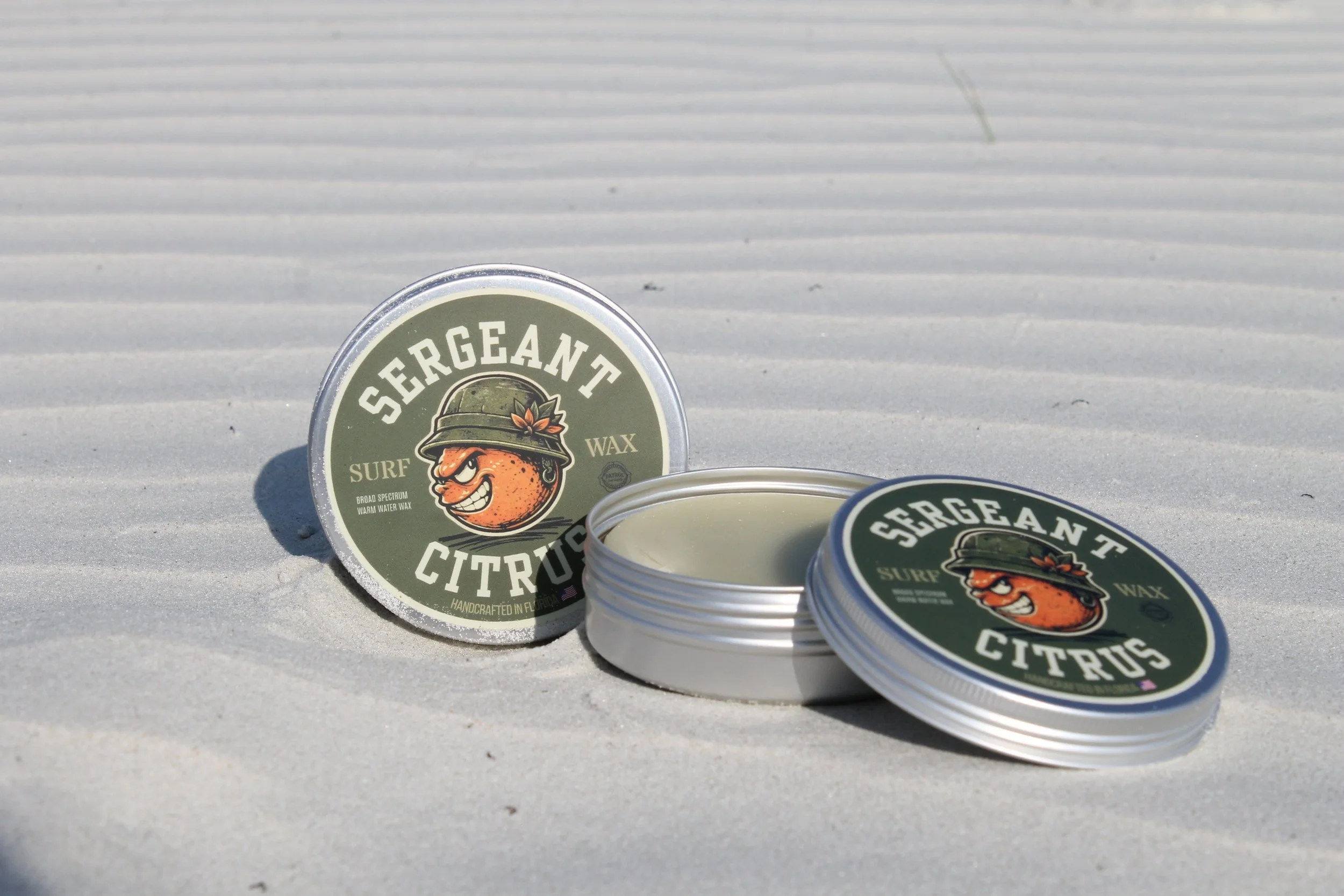
The waves were the best I’d seen in probably a month. The wind was decent, the sets were chest-high or better, and for a couple of hours, everything else disappeared. I was riding Sergeant Citrus Surf Wax that afternoon, too, which got me thinking about surf wax.
Most people think wax works because it’s “sticky.” That's true, but there's a little more to it.
A surfboard is smooth because it’s designed to glide. Wax gives your feet something to grab without gluing you to the board. Duh.
When we started developing Sergeant Citrus, that was the goal: a warm-water wax that stayed grippy without turning into a soft, sludgy mess.
That might not sound exciting until you've surfed with wax that melts under your feet, develops bald spots, or leaves you standing on a lumpy layer of softened wax.
If you surf a lot, you probably don't think much about how often your feet move. You're constantly shifting your weight and making little adjustments without even realizing it.
I guess all I'm trying to say is, dependable traction matters. Your wax shouldn't get between you and the wave. Oh, did I mention we sell wax?